
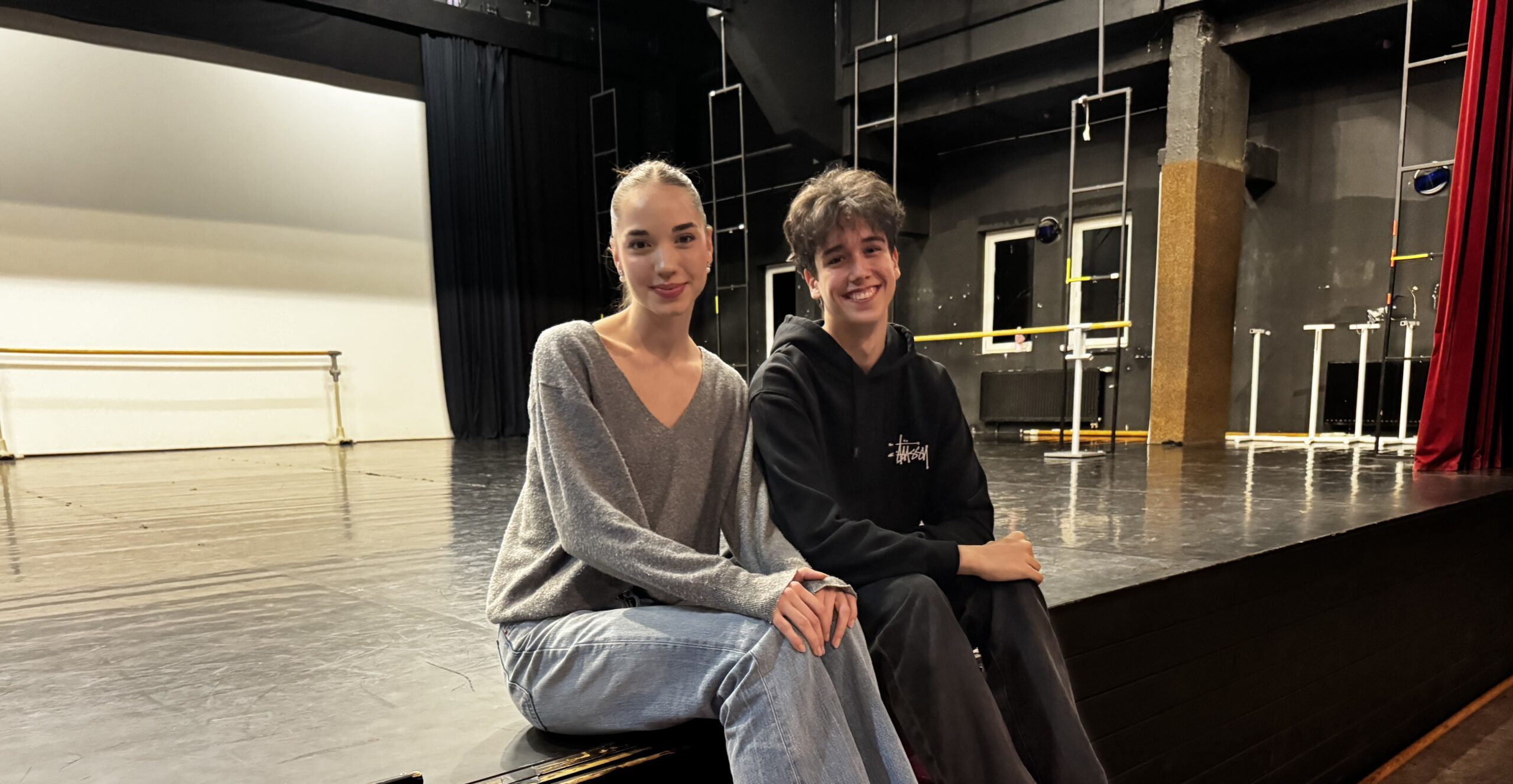
Two students of the Hungarian Dance University (HDU) Márton Balog and Boróka Kosaras, will have the chance to take part in what is perhaps the world’s most renowned ballet competition, the Prix de Lausanne. Marcika — as many at the university call him — has been selected among the competitors, while Boróka Kosaras will participate in the Partner School Choreographic Project. Both opportunities are tremendous achievements, but Márton Balog’s is especially remarkable, as he has effectively been ranked among the twenty best ballet artists of his age group.
An interview was made with the two young dancers, the sixth-year student Marci Balog (BM) and the eight-year student Boróka Kosaras (BK, her master teacher is Angéla Kövessy), at the junior Zoltán Nagy Theatre Hall of the university. Marci’s master teacher is József Medvecz (JM), who was also present at the interview.
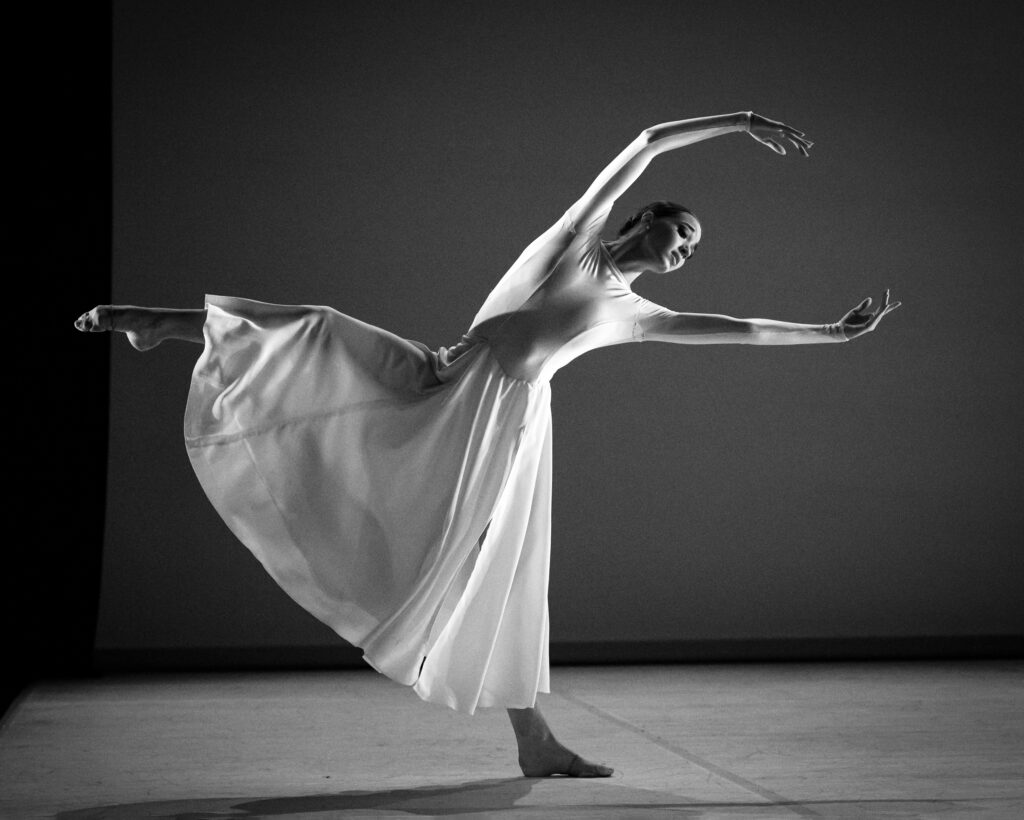
“Ladies first. Boróka, how did you get selected for the choreographer project?”
(BK) I was selected for the project by the university leadership, and I’m very grateful for it. I had to prepare two modern choreographies with the help of my teacher, Attila Kalmár. A recording was made of them, which had to be sent to the organizers.
“Congratulations! Boró, you’re in the eighth year of the program, while Marci, not long ago you were barely tall enough to peek out from the ground. Really, how much have you grown in the past one or two years?”
(MB) I think at least 20 centimetres, maybe even more.
“So it doesn’t bother you?”
(MB) No, not for now.
“Master Józsi, should I ask you too—what year are you in?”
(JM) I’m retired… I just keep working. (Laughs.)
“Why is Lausanne special for you, Marci? Why are you happy — or not happy — that you were selected?”
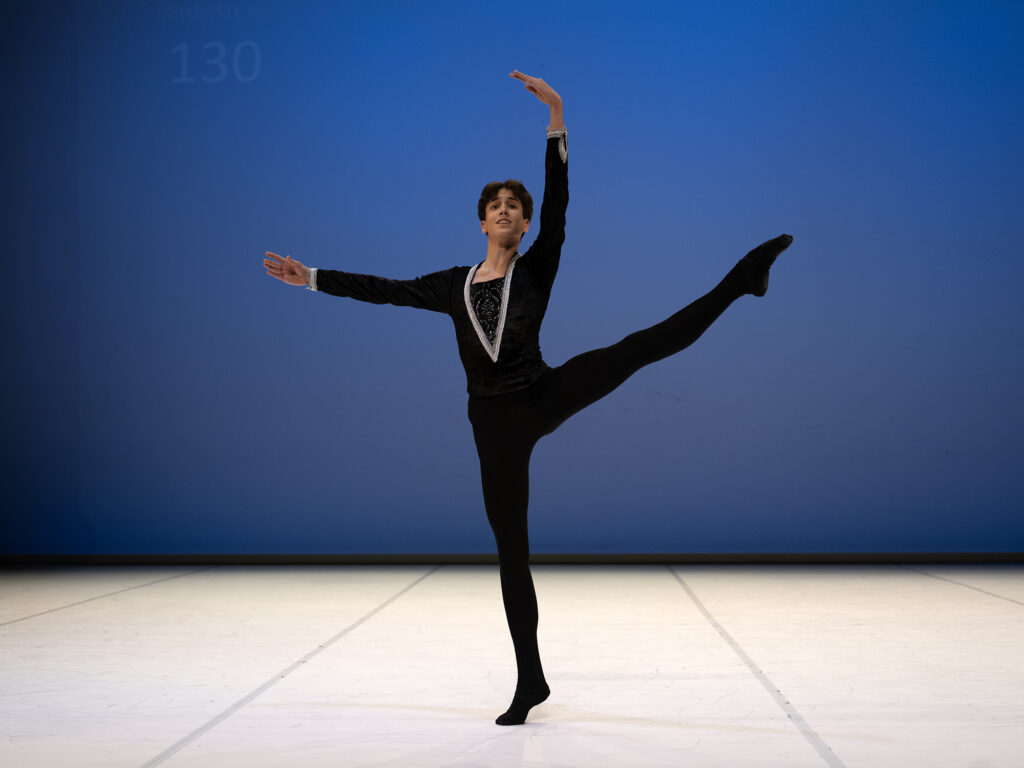
(MB) To be honest, I’ve been following the competition for a long time; we even watched it in class back in school. I was always amazed at how big the competition is and how good the dancers are who take part in it. Of course, we dreamed about it — how great it would be to get there and perform on that stage. In truth, all this is a dream come true. It’s incredible that I can go now and spend a whole week working together with dancers who are just as skilled and talented, and experience what it’s like to learn from truly great people, masters, dancers.
“Boróka, what is it that really attracts you to this opportunity?”
(BK) I really noticed the choreographer project last year, when Levente Bajusz was able to take part in it. I talked a lot with him about it, and he motivated me — he also helped me a great deal. Based on what he told me, I decided to dive in. It made me curious, and I’m very much looking forward to the project.
“You’ve both taken part in competitions before. This may be a brutally honest question: We have excellent teachers here at the university too, but can you really learn that much from others out there at an event? Are there truly impressions that stay with you, moments when you think: wow, that’s a new perspective?”
(MB) Absolutely, because everyone has different experiences in their life and career, and they share these with us there. Since they are recognized artists, they can pass on things that will later make us more complete once we learn them.
(BK) I agree, completely. We’ll be working with famous choreographers and masters, and each of them asks for something different and gives different instructions — artistic or technical — so there is a lot to learn from them.
“By the way, professionally speaking — if I ask you now, Józsi — what is the difference between the two opportunities awaiting these young dancers?”
(JM) Experience shows that for those who take part in the choreographer project, it gives a tremendous boost to their careers and opens up an entirely new perspective for them. Since Boróka is already preparing for professional life, this is especially important in her case, in my opinion. The other opportunity is the competition itself. To use a sports metaphor — that is the Premier League. The best league in the world. That one week the participants spend there, working with those experts, opens a new path for them. Honestly, it’s secondary who actually wins the competition. Anyone who gets to take part in that week-long event is among the best. We’re essentially talking about the top 20 young dancers in the world in each category. So Marci has made it into the top 40 — the top twenty of his age group. That’s huge!
“And what about the choreographers? Is the work there different — a different direction the participants encounter?”
(JM) It’s a little different. It’s creative work in which they also take part. It’s different in the sense that you can work and think together every day with an established choreographer who is creating the piece. This is a significant experience.
(MB) I’d add to what the master said: out there we will be watched by people from all over the world, including company directors and various schools. We may receive invitations, and they will remember us — which can be very important for our careers later on.
“And could it happen that, for example, they look at Marci and say: ‘Wow, he’s really good!’ — and then invite him somewhere… permanently?”
(JM) Nowadays this is a complex issue. In reality, we can’t talk anymore about someone being “taken away” from a competition like this, because the world is completely different than it was 15–20 years ago — students go on their own initiative. Marci has already been, for example, to the Royal school several times, attending summer courses, and the same opportunities can be offered to him there. So yes, it’s a real issue — in general, worldwide — that everyone tries to draw talented students away from each other. But there is an essential principle here: at the Hungarian Dance University, our priority is to support our students’ professional development to the greatest possible extent. If an opportunity is advantageous for them, they must take it. And personally, I’m happy if we could accompany them to the doorway of that opportunity. Of course, at the same time, we do everything we can to maintain a level of education that makes it worthwhile to stay with us. I believe we have that, and the university’s goal is to keep its talents.
We wish Márton Balog and Boróka Kosaras the best of luck in Lausanne!